Ph.D. in Biomedical Science: Area of ConcentrationMolecular
Biology and Biochemistry
Program Description
Courses
Since students enter our program from diverse backgrounds, flexibility
in designing the right advanced program for each student is important.
Our curriculum is intended to provide rigorous training in the basic
experimental principles that enable the study of any biological problem.
We recommend that prospective students take the new Logic of Modern
Biology course. This course may be augmented with the appropriate
combinations of the more specialized courses listed below. Students
should also feel free to enroll in advanced courses offered by other
programs that may provide the necessary background for the development
of their thesis. Your first year advisors will help you with these
choices, and more detailed advice is always available from program
directors and course leaders.
MEDS 497-41 – Molecular Biology and Biochemistry Journal Club.
In this course, students participate an open and lively forum where
students, postdocs and faculty present and discuss “cutting edge”
papers. Some highlights of last year’s discussions were; evidence for an
RNA cache, microRNAs and heart disease, new mechanisms in DNA repair,
viral escape strategies, small bacterial RNAs.
Dr Chris Heinen and staff
MEDS 444 – Molecular Microbiology. This course will provide
students with a broad understanding of modern topics in contemporary
molecular
microbiology. The course is designed to provide understanding of
microbial principles in the study of bacteria, viruses, fungi and other
eukaryotic parasites with a special emphasis on areas of current and
emerging importance. The teaching faculty are actively involved in the
fields of virology, bacteriology, parasitology and mycology.
Dr Sandra Weller and staff.
MEDS 309 – Molecular Basis of Disease. A seminar course that
investigates the biochemical basis of human diseases such as Myasthenia
Gravis, Ovarian Cancer, Prion disease, Alzheimer’s and Fragile X.
Students are encouraged to critically evaluate the current dogma and to
formulate novel hypotheses that explain the disease process. Dr Henry
Furneaux and staff.
MEDS 369 – Advanced Genetics. An advanced course emphasizing
approaches to the molecular and genetic analysis of prokaryotic and
eukaryotic cells and their viruses, Drosophila, and yeast. The
application of these techniques to problems of genome organization, DNA
replication, regulation of gene expression, RNA processing, and
differentiation will be discussed. The course combines lectures and
discussion of current journal articles. Dr Asis Das and staff.
MEDS 351 – Cool Techniques in Biochemistry. The goal of this
course is to familiarize the students with a variety of powerful and
sophisticated modern instrumentations to analyze the properties and
interactions of biological macromolecules in vitro and in vivo. The
course will cover the principle and practice of various experimental
techniques, including titration calorimetry, nuclear magnetic resonance,
fluorescence correlation spectroscopy, and DNA microarray technology. In
each week, there will be a demonstration of a particular
instrumentation, its operation, data acquisition and analysis. In the
second part of the course, each student will choose one technique to do
a mini-project under the supervision of one participating faculty member
to investigate a specific biological problem. Dr. Hoch and staff.
MEDS 368 – Hot Topics in Molecular Biology and Biochemistry.
These are one credit courses intended to provide the student with an
in-depth knowledge of a fast breaking area of biology through the
discussion of recent papers.
[back to top]
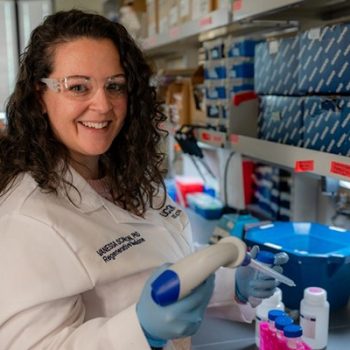
Laboratory Rotations
Laboratory rotations are a major commitment for each student during
the first year. They provide practical research experience and exposure
to different research approaches and techniques.
[back to top]
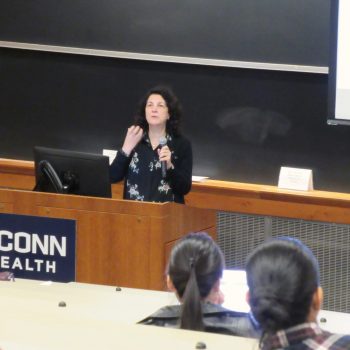
Seminar Program
The program hosts a variety of seminars. The Molecular Biology and
Biochemistry Seminar Series features invited speakers of international
renown. Each year the “Osborne Lecture” celebrates the work of a female
scientist who has made significant contributions to her field. There is
also a monthly MBB student “Work in Progress” series where students
discuss their latest research in an informal setting.
[back to top]
The General Exam
This examination is the formal gateway to the preparation of a
thesis. In their second year, students write a research proposal on
their proposed thesis topic. This is a remarkable opportunity for
students to display their knowledge and expertise in experimental
design. In many cases, these examinations have been incorporated into
successful fellowship grant applications. This provides the student with
direct experience in the grant application process, a critical aspect in
career development.
[back to top]
Internet Access
All laboratories have excellent Internet access to the relevant
scientific journals. The majority of our courses provide online
material. Many students are provided with a laptop to facilitate
interaction and communication. The Computational Laboratory provides
facilities for high-end molecular graphics, protein modeling, and more
advanced types of data analysis.
[back to top]
Happy Hours
Individual labs take turns to host the monthly Happy Hour. Students
are encouraged to take advantage of the free food and drink and the
opportunity to interact with other students, postdocs and faculty.
[back to top]
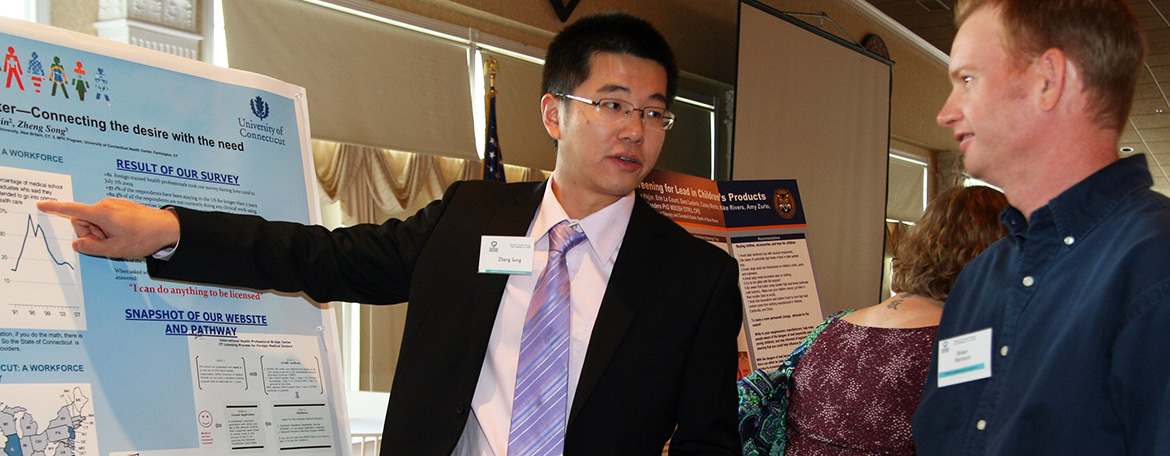
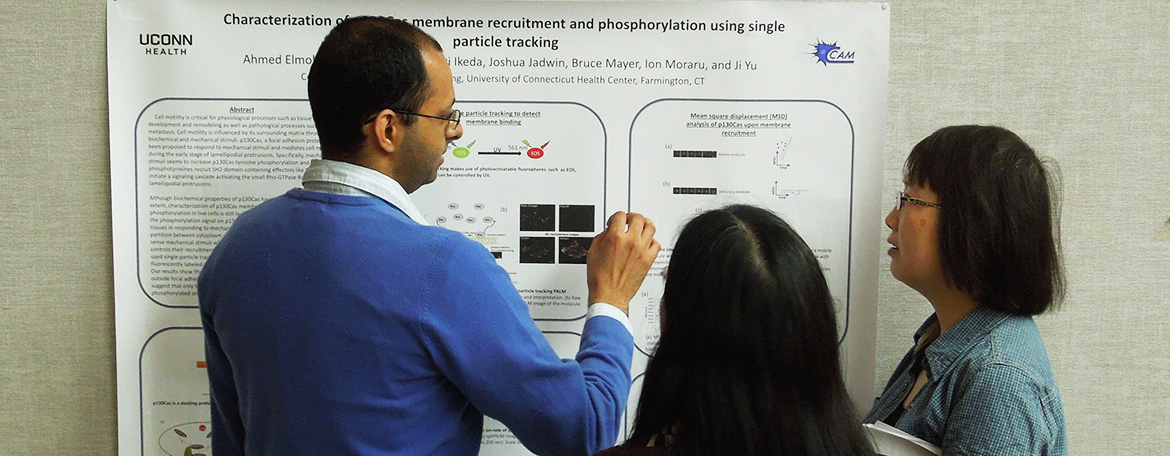
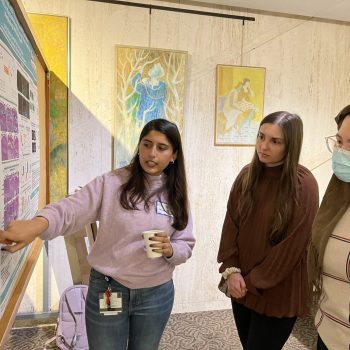
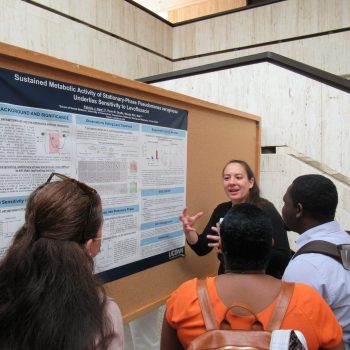
Annual Research Retreat
Each year, we hold an off-campus research retreat in which labs are
given the opportunity to present their research work in the form of
seminars and posters. The retreat is run as a mini-conference which
provides an excellent opportunity for students to hone their skills in
oral and poster presentations.
[back to top] |